Eco-Friendly Wedding Favors: What to Give When You Don't Want It in a Landfill
TL;DR
- The average wedding produces roughly 400 lbs of trash, 8–12 lbs per guest. Favors contribute directly at 100–200g of packaging waste per guest (primedumpster.com, bananainvite.com).
- The problem is the format, not the gesture: small, single-use, over-wrapped items are what make favors waste-dense.
- Consumables, plantables, and quality reusables solve the waste problem because they get used up or used daily instead of thrown away (theknot.com, withjoy.com).
- The 2026 shift in favors favors intention over volume: fewer, better, more personal choices over a table of mass-produced trinkets (sweetie-group.com).
Eco-friendly wedding favors get judged the morning after, not on the table. By the time the last song fades and the string lights come down, a wedding has produced about 400 pounds of garbage. Somewhere between 8 and 12 pounds of it lands on each guest (primedumpster.com). Favors are a real line item in that total, not an afterthought. A physical favor, once you count the box, the ribbon, the tissue paper, and the tag, runs 100 to 200 grams of packaging waste per guest. Compare that to zero physical waste for a digital or edible alternative that never needed wrapping to survive the night (bananainvite.com). That’s the math worth sitting with before you order 150 of anything.
The reason favors run so waste-heavy isn’t the gift itself. It’s the format. Favors tend to be small, single-use, and wrapped past what the object actually needs, which is exactly what turns a nice gesture into landfill weight. Walk the reception hall the morning after. The discarded favors sit right alongside the crumpled napkins, the abandoned programs, and the disposable dinnerware, a recognized category of post-wedding trash, not an edge case (primedumpster.com, catalystwedco.com).
It isn’t cheap trash to produce, either. Most couples spend $2 to $5 per guest on favors, up to roughly $500 for a 100-person wedding, often on something a guest never touches again after the car ride home (moneywise.com, catalystwedco.com). Paying to fill a landfill is the actual failure here, not the impulse to give guests something.
Why Favors End Up in the Trash More Than Anything Else on the Table
Most favors fail the same test: they’re chosen for how they look lined up on a table, not for what happens to them after a guest picks one up. A mini candle in a printed box. A shot glass with a monogram and a date nobody will remember. A sachet of something nobody asked for. None of it is malicious. It’s optimized for the photo, not for the following Tuesday, and that’s precisely the gap.
Bulk ordering makes the problem worse before a single guest ever picks one up. A vendor’s minimum order pushes a couple toward 150 identical items chosen for the group rate, not for what any one guest actually wants. That’s how a table ends up stocked with whatever was available in bulk instead of anything a guest would ask for by name.
Low-waste favors close that gap without asking a couple to give up the gesture. The goal isn’t a “green” version of the same trinket. It’s choosing something with an actual job to do after the reception ends: eaten, planted, or used, so it never becomes a discard problem in the first place.
wedding favor cost per guest, broken down by category
Favor Categories That Actually Avoid the Landfill
Four favor categories reliably avoid the landfill: seed paper and plantables, reusable items guests already need, consumables, and a broader shift toward fewer, more personal gifts.
Seed paper and plantables. Seed paper cards and small potted succulents rank among the categories genuinely trending into 2026. They solve the waste problem structurally: the “packaging” is the gift, and it goes into soil instead of a bin (theknot.com).
Reusable items guests already need. A well-made tote, a good insulated mug, a set of cloth napkins: anything ordinary enough to earn a spot in a kitchen drawer or a back seat. The test is simple: would a guest buy this for themselves? If yes, it survives past the weekend (emmalinebride.com).
Consumables (edible, local, artisanal). Food gets eaten. That’s the entire case for it as a favor category, and it’s the most reliably low-waste option on this list: local honey, a small-batch jam, a bag of coffee roasted somewhere in Chicagoland. Nothing survives to be thrown away, because nothing survives past breakfast (withjoy.com).
Fewer, better, more personal. The clearest trend line heading into 2026 isn’t one category. It’s a shift away from mass-produced trinkets bought in bulk and toward fewer items chosen with actual intention: something local, something experiential, something that reflects the couple rather than a catalog page (sweetie-group.com).
| Favor Category | What Happens After the Reception | Landfill Risk |
|---|---|---|
| Seed paper & plantables | Goes into soil instead of a trash bin | Low: the packaging is the gift |
| Reusable items guests already need | Earns a spot in a kitchen drawer or back seat | Low: passes the “would they buy this themselves” test |
| Consumables (edible, local, artisanal) | Gets eaten within days | Low: nothing survives to be thrown away |
| Mass-produced trinkets (candles, shot glasses, sachets) | Sits on the table until the room is stripped | High: chosen for the photo, not for after |
None of these categories require a special vendor relationship or a certification badge to pull off. The shift is in what gets ordered, not in how it gets marketed. A jar of local honey and a printed “eco-friendly” sticker are not the same decision, and only one of them changes what’s left on the table by Sunday morning.
For the full landscape of what’s trending across all of these categories, see our complete guide to 2026 wedding favor trends. And if the real question is which favors guests keep instead of quietly tossing, that has its own answer: what wedding favors guests actually keep.
Where Photography Fits, Honestly
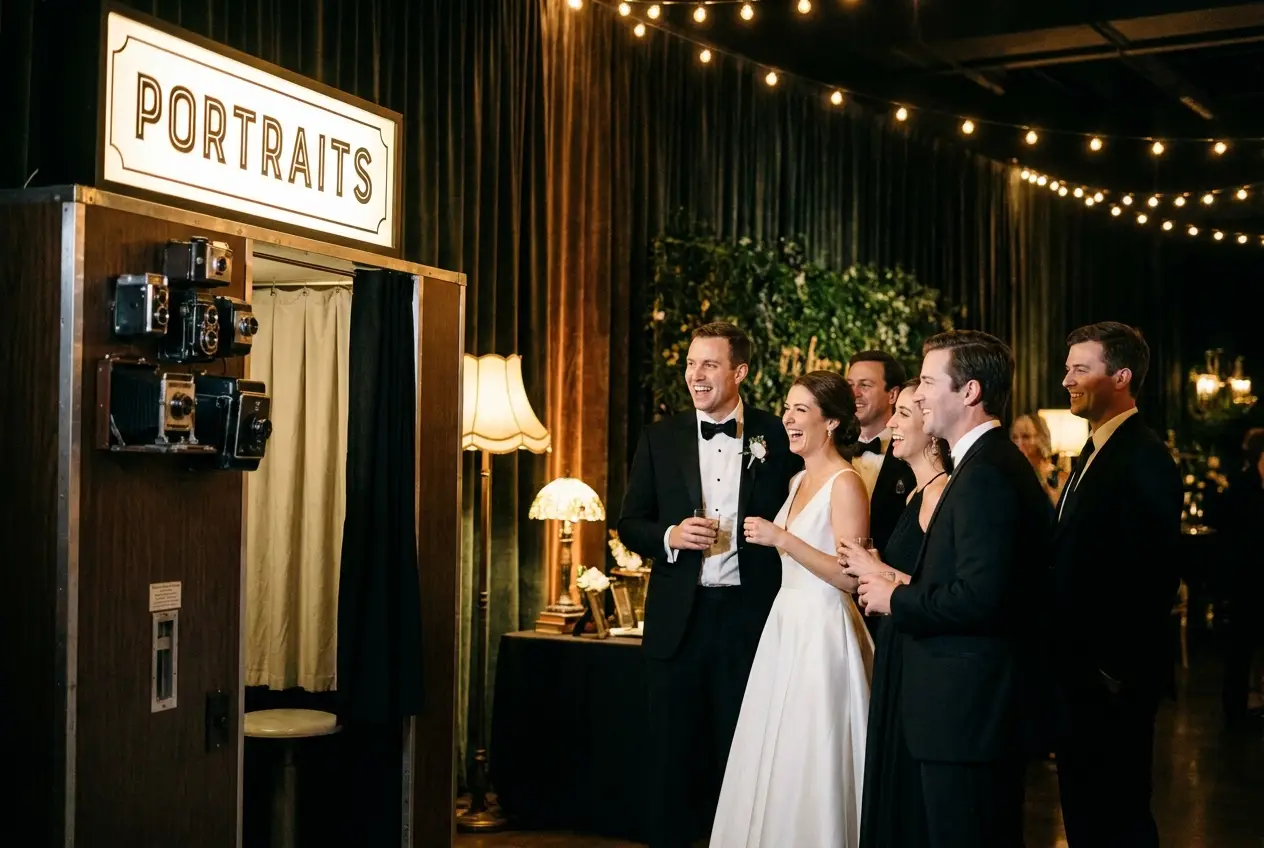
Photo favors deserve honest treatment in this list. A digital gallery delivered after the event adds nothing to a guest’s trash: no packaging, no object, no landfill line. A printed photo is a different case. It’s still a printed object, full stop, and pretending otherwise would be the same over-promising that makes a lot of “eco” favors hollow to begin with. No amount of good lighting or a directed pose changes that math. Paper is paper. If a print is part of the plan, choose one built to be kept, not one built to sit next to the discarded favors by Sunday morning.
when a portrait print actually works as a wedding favor
The One Rule: Would a Guest Use It Within 30 Days?
The one rule for choosing a low-waste wedding favor is this: will a guest eat it, plant it, or actually use it within the next month? Skip the debate over materials and certifications. That single question does the filtering instead. If the honest answer is no, the packaging doesn’t matter. It’s headed for a landfill either way, just on a longer timeline.
That single filter clears out most of what fills a favor table by default. It tends to cost less, too, since consumables and small plantables rarely climb toward the $5-per-guest ceiling that trinket favors reach (moneywise.com).
Apply it guest by guest, not category by category. A candle might pass the test for one household and fail it for another; a jar of local honey clears the bar almost every time, because eating it takes no effort and no decision. When in doubt, favor the option with the lowest bar to actually get used: that’s usually food first, plantables second, and anything durable enough to earn a permanent spot in someone’s routine third.
Frequently Asked Questions
What’s the most eco-friendly wedding favor?
Consumables and plantables lead the category because they don’t outlive their usefulness: food gets eaten, seed paper and succulents get planted. Both avoid the packaging-heavy, single-use pattern that makes most traditional favors waste-dense (theknot.com).
Do eco-friendly favors cost more than traditional ones?
Not necessarily. Most couples already spend $2 to $5 per guest on favors regardless of category (moneywise.com). Consumables and small plantables generally sit at the lower end of that range, since the cost goes into the item itself rather than boxing, ribbon, and a printed tag.
Is it acceptable to skip favors altogether?
Yes. A guest table with no favor produces zero favor-related waste, which is the actual goal here. Couples who’d rather put that line item toward the room, the food, or the guest experience itself aren’t skipping a tradition. They’re opting out of the part that was never really about the guest to begin with. If you’re weighing that full guest experience for a Chicagoland wedding or gala, the current lineup lives at /weddings/ and /experiences/, or call (224) 434-3461 with questions.
Does personalizing a favor change whether guests keep it?
Guest-name personalization beats couple-branding. Zola and Kennedy Blue both report that favors carrying a guest’s own name are more likely to be kept than favors marked only with the couple’s initials and wedding date (zola.com, kennedyblue.com). The couple’s name signals whose day it was; the guest’s name signals the item is actually theirs to take home.
What’s the difference between a favor marketed as ‘eco-friendly’ and one that’s genuinely low-waste?
The label doesn’t change what happens after the reception. Only the format does. A favor stamped ‘eco-friendly’ but boxed, ribboned, and tagged like any trinket still produces packaging waste. Genuinely low-waste favors are ones a guest eats, plants, or already needs, regardless of what the packaging says.
The Takeaway
The waste math on favors isn’t complicated: consumables get eaten, plantables get planted, and anything a guest would buy for themselves earns its spot in a drawer instead of a landfill. Skip the trinket table if it isn’t clearing that bar, and put the budget somewhere the room will actually feel it.
Weighing a portrait station, a 360 Video Booth, or a Photo Booth as part of that guest experience instead? Request a quote for your date, or call (224) 434-3461 to talk through what fits your reception.
You Will Never Forget It, Chicagoland event photography. (224) 434-3461.