← The Journal

What Should You Spend Per Guest on Wedding Favors?

The question every couple asks is “how much per favor.” The better question is what that line item actually buys, and whether the room remembers it once the last song plays.

A guest list of 150 at three to five dollars a head is real money, spent on something with an uneven track record of making it home with anyone. This guide walks the math by guest count, what the data says guests keep versus toss, and when the smartest favor budget is no favor budget at all.

TL;DR

  • Most couples spend $2 to $5 per guest on wedding favors, topping out around $500 for a 100-guest wedding (Moneywise; Catalyst Wed Co).
  • At 150 guests, that per-guest range runs $300 to $750, real money spent on items guests often leave on the table.
  • Guests keep favors they can eat, use, or display; couple-branded trinkets with a printed name and date rarely make it home (WithJoy; The Knot).
  • Personalizing a favor with the guest’s own name, rather than the couple’s, measurably improves keep rates (Zola; Kennedy Blue).
  • Skipping favors entirely is a common, accepted choice; redirecting that budget line toward one experience like a portrait station adds cost rather than saving money.

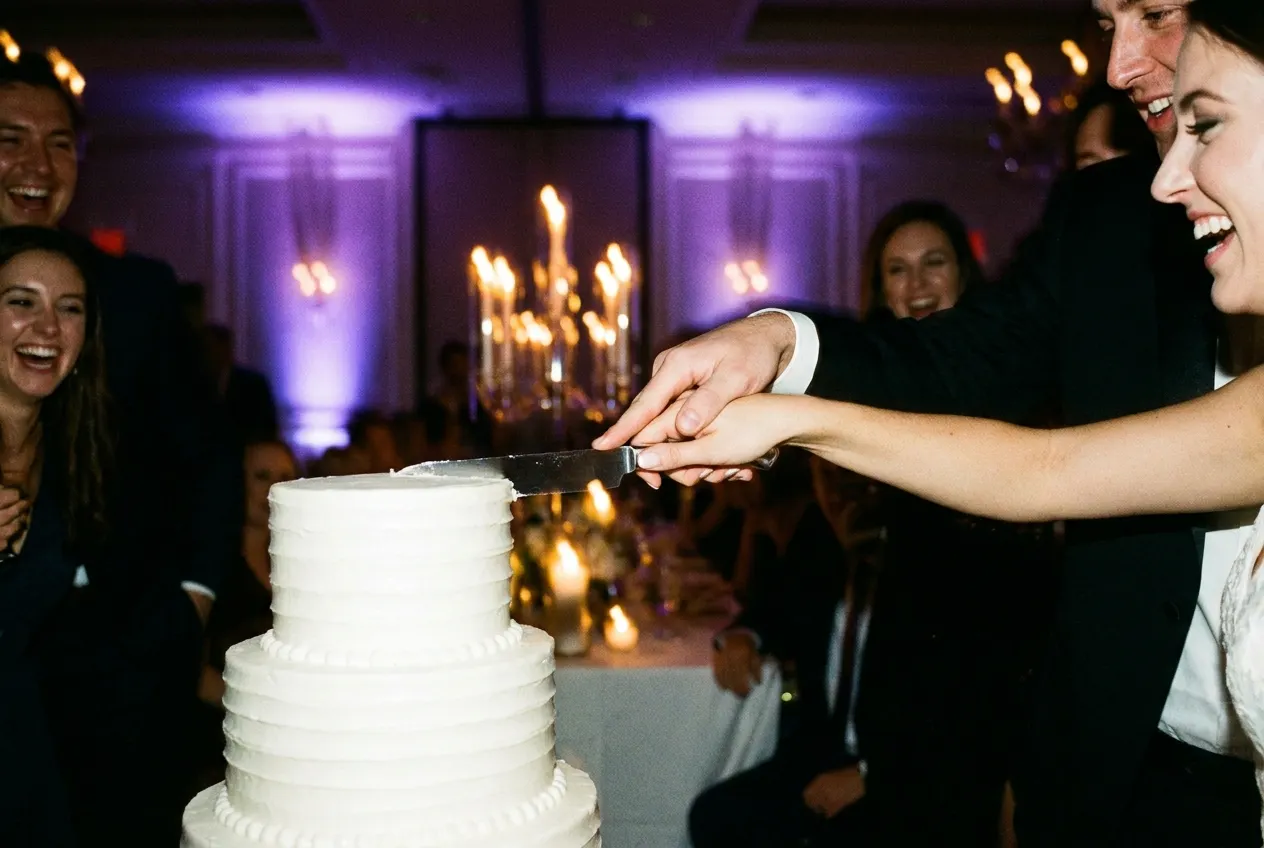
A cake-cutting moment at a reception, lit by flash against a darker room

What Couples Actually Spend Per Guest

Wedding favor spending typically runs $2 to $5 per guest, according to Moneywise and Catalyst Wed Co, with a 100-guest wedding topping out around $500 total (Moneywise; Catalyst Wed Co). That range holds whether the favor is a jar of local honey, a mini bottle of something, or a printed matchbook. The category sets the price, not the object inside it. The room doesn’t care what’s in the box. The guest list does the math for you the moment a per-head number gets multiplied by a headcount that keeps growing every time another cousin RSVPs yes.

The Guest List Math, Guest Count by Guest Count

The $2 to $5 per-guest favor range turns into real numbers once it’s run against an actual guest list, table by table.

Guest CountAt $2/guestAt $5/guest
50$100$250
100$200$500
150$300$750
200$400$1,000

Based on the $2–$5 per-guest range reported by Moneywise and Catalyst Wed Co.

A 150-guest wedding sits at $300 to $750 before a single vendor line gets touched. That’s not a rounding error in a six-figure budget. It’s a real decision point, and it deserves the same scrutiny as the flowers or the DJ.

What Guests Keep — and What They Leave on the Table

A wedding favor earns its place on the table by getting used, eaten, or displayed. Everything else goes in a hotel trash can before the valet brings the car around.

WithJoy, Woman Getting Married, and The Knot all point to the same pattern: guests keep what serves a purpose after the night ends, and they leave behind whatever exists only to announce whose wedding it was (WithJoy; Woman Getting Married; The Knot). A couple’s initials and wedding date, stamped on a trinket, tell the guest exactly why it isn’t theirs to keep. Compare that to a favor personalized with the guest’s own name instead. Zola and Kennedy Blue both report stronger keep rates when the personalization points at the guest, not the couple (Zola; Kennedy Blue). Name-on-it beats couple-on-it, every time the two get compared directly. For the fuller breakdown of exactly which favors clear the table and which ones don’t, see wedding favors guests actually keep.

The Waste Line Nobody Budgets For

Wedding favor waste is the line nobody budgets for. Every favor that doesn’t go home still has to go somewhere.

Physical favors generate roughly 100 to 200 grams of packaging waste per guest: the box, the ribbon, the little card explaining what’s inside (Banana Invite). Multiply that across 150 place settings and the packaging alone becomes a real pile before a single favor gets opened. The average wedding produces close to 400 pounds of garbage over the course of one event (Prime Dumpster), and unclaimed favors sitting on a stripped table at midnight are part of that number. The room empties. The staff bags what’s left. None of it makes the drive home.

When Skipping Favors Entirely Is the Right Call

Skipping wedding favors entirely is a legitimate call for plenty of couples. Not every guest list needs a parting gift, and the choice draws no complaints from guests.

Skip it when the wedding already gives guests something to take home in a different form: a late-night snack bar, an open bar tab that does the thanking for you, a photo. Skip it when the guest list runs past 150 and the per-guest math starts competing with a line item that touches every guest more directly, like a catering upgrade or an extra hour of the band. Skip it when neither of you wants to spend a planning session sourcing, packaging, and place-setting something the data says a real share of the room won’t take home anyway. None of that is a compromise. It’s a budget decision made with the actual keep-rate numbers in front of you instead of against them.

The Reallocation Question — and Its Honest Limit

Favor budget reallocation is when couples take the per-guest favor line and point it somewhere else entirely: one experiential vendor instead of 150 small objects.

A directed portrait station is one version of that redirect — a stage, not a curtain, where the room steps in front of real light and walks away with a printed frame instead of a matchbook. But be honest about the trade before you make it: a photo vendor typically costs well more than a $300–$750 favor line covers. Chicago-market portrait station pricing runs from roughly $2,000 at the entry end to $3,800 and up for a full-service package (Pixel Pro Photo Booths; Lumière Chicago), and 360 video booth rentals most commonly land between $900 and $2,500 (Clear Choice Photo Booth). YWNFI’s own portrait station starts from $2,950, under Lumière Chicago’s $3,800 floor for the same category (Lumière Chicago) — what moves that number is format, hours, guest count, and travel to your venue. For comparison, The Knot’s Real Weddings Study puts average wedding photographer cost at $2,000 to $3,000 (The Knot), a similar order of magnitude. This is a reallocation plus additional spend, not a swap that balances to zero. The favor line covers a fraction of the vendor cost; the rest comes from somewhere else in the budget, on purpose.

What you get in exchange isn’t a trinket count. It’s a moment the whole guest list steps into, in the room, under real light, while the night is still happening around them. A printed portrait even doubles as the personalized takeaway the data above favors, since it carries the guest’s own face home instead of the couple’s initials. For couples who want to skip favors while keeping the personalization, see turning a portrait station print into the wedding favor itself. Whether the gap in cost is worth the trade is a couple-by-couple call, not a universal formula. For the full picture of how a directed portrait station differs from an automated photo booth, start with the complete portrait station guide.

Frequently Asked Questions

How much should I spend per guest on wedding favors?

Most couples spend $2 to $5 per guest on favors, which works out to $200–$500 for 100 guests and $300–$750 for 150 guests (Moneywise; Catalyst Wed Co). Where you land in that range should track your total budget more than any per-favor tradition. Nothing requires a favor at every place setting.

How much packaging waste do wedding favors create?

Physical wedding favors generate roughly 100 to 200 grams of packaging waste per guest: the box, the ribbon, the printed card (Banana Invite). At 150 guests, that adds up fast, on top of the roughly 400 pounds of garbage the average wedding produces overall (Prime Dumpster). Favors left unclaimed at the end of the night add directly to that total.

Is it rude to skip wedding favors?

No. Skipping favors is a common, accepted choice, not a breach of etiquette, and it’s worth weighing against the keep-rate data above before you commit to a line item guests may not take home anyway. For the wider view of where favors are heading as a category, see wedding favor trends for 2026.

2026 favor trends lean practical and eco-conscious: seed paper, plantable succulents, and reusable totes guests actually use again (The Knot). Edible and locally sourced favors are gaining ground too, alongside interactive made-on-site favors like live illustration, cigar rolling, fragrance bars, and on-site engraving (Sweetie Group; Emmaline Bride). All of these tend to outperform printed trinkets on keep rate.

What can couples do instead of traditional wedding favors?

Some redirect the favor budget toward a single guest experience instead: a portrait station, a late-night snack station, a photo guests take home rather than a trinket. Budget honestly if you go this route: a photo vendor typically costs more than a favor line covers, so it’s additional spend, not a wash (Pixel Pro Photo Booths; Lumière Chicago). See experiences for what YWNFI offers as an alternative.

The Takeaway

$2 to $5 a guest sounds small until it’s multiplied by a real guest list: $300 to $750 at 150 guests, spent on items with an uneven track record of leaving the venue. Personalize what you do buy, budget honestly if you redirect that line toward an experience instead, and don’t feel obligated to buy favors at all if the rest of the night already gives guests something to remember. For the fuller category picture, see wedding favor trends for 2026 or explore what YWNFI offers as a guest experience.

Get a Custom Quote for Your Guest List

YWNFI publishes a starting price rather than a single flat package for every wedding — the portrait station begins from $2,950. What moves your final number is format, hours, guest count, and travel to your venue. If the reallocation math above makes sense for your wedding, request a custom quote or call (224) 434-3461 to talk through which of the three experiences fits your night and your budget: the portrait station, the 360 video booth, or the photo booth. Browse pricing for all three starting prices, or see the full gallery before you call.

Your date only happens once.

We take a limited number of events per weekend so every room gets a full crew. If your date is set, find out now.