← The Journal

The Favor With Their Own Face On It: Portrait Prints as Wedding Guest Gifts

The favor table sits by the exit. Little jars, little boxes, a name card in script. By midnight, a third of them are still there, untouched, and the venue staff will bag them for the trash in the morning. That’s not a guess about your wedding specifically. It’s the pattern the favor research keeps finding, and it’s worth taking seriously before you spend on a table full of trinkets nobody asked for.

There’s a different kind of favor that skips the table entirely: a printed portrait, made of the guest, handed to them before they leave. It isn’t cheap. It isn’t for every wedding. But the evidence on what guests actually keep points straight at it, and the case is worth building carefully rather than assuming.

TL;DR

  • Favor research consistently finds guests keep items they can eat, use, or display, and leave behind items that fit none of the three (withjoy.com, theknot.com).
  • Favors personalized with the guest’s own name test better than favors stamped with the couple’s name, because they read as generous rather than promotional (zola.com, kennedyblue.com).
  • A portrait sits in the display category and personalizes past a name, since the personalization is the guest’s own face.
  • A portrait station costs far more than a $2–$5 per-guest favor and only reaches the guests who visit the station during the event, not the full guest list.
  • YWNFI’s portrait station starts from $2,950, with the final total set by format, hours, guest count, and travel, not by a per-guest favor budget.

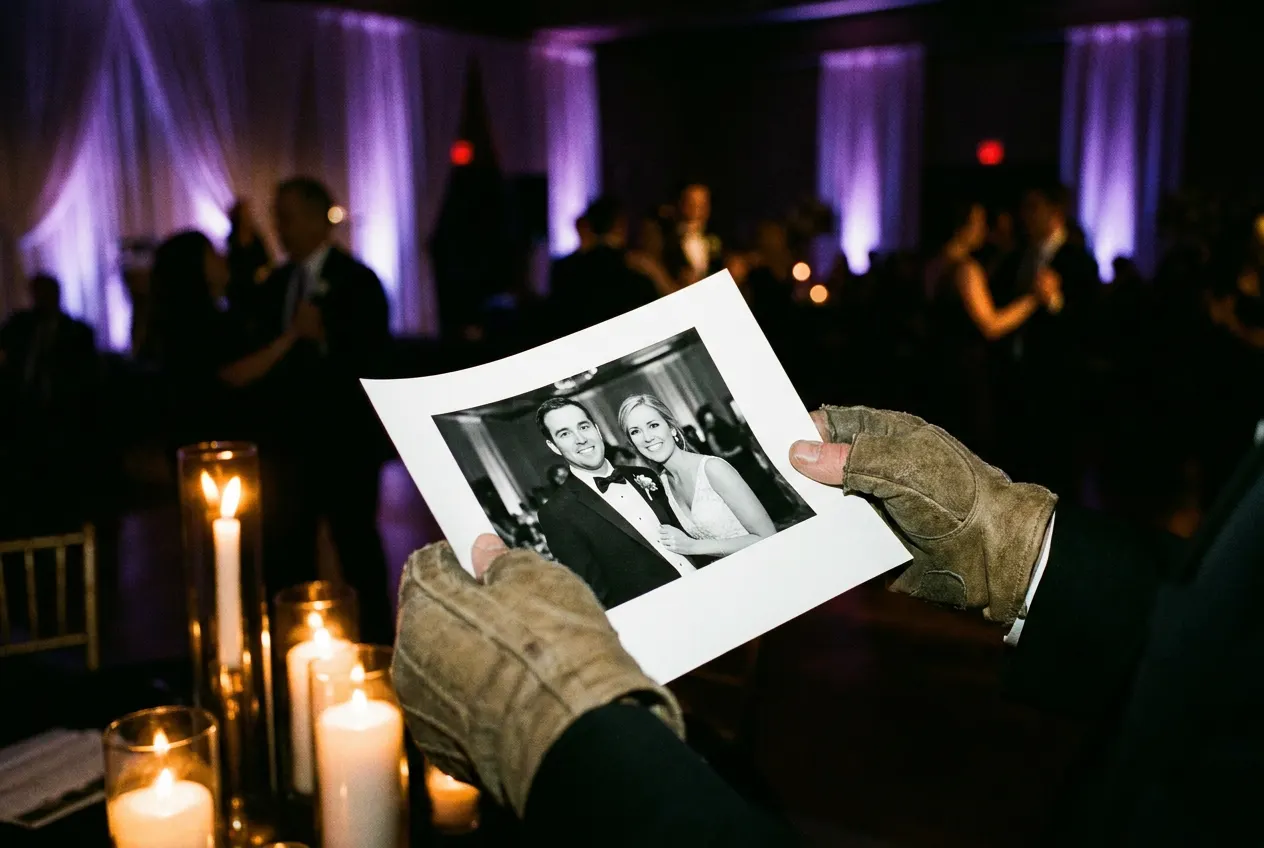
A freshly made photographic print held in a guest hand at an evening event

What Guests Actually Keep From the Favor Table

Guests keep what they can eat, use, or display. Everything else gets left on the table, and multiple wedding-planning sources land on the same three categories when they explain why some favors survive the ride home and others don’t (withjoy.com, womangettingmarried.com, theknot.com).

Run the standard favor lineup against that filter and most of it fails quietly. A candle with the couple’s monogram burns down or sits unlit on a shelf until it’s donated. A shot glass with a wedding date joins six others in a drawer. A packet of seeds needs a yard, a season, and motivation the guest may not have on a Tuesday in November. None of these are bad ideas. They’re just competing against a bar that’s higher than it looks: eat it, use it, or want to look at it again.

Display is the category that does the most work here, because it’s the one couples reach for without checking whether the object actually clears it. A trinket stamped with initials and a date isn’t something a guest wants to display. It’s something the couple wanted displayed, a different thing entirely. the full research on what guests keep vs. what gets left behind

Personalized to the Guest, Not the Couple

The name on a wedding favor matters more than couples expect. The direction of that name, the guest’s or the couple’s, is the whole story. Favors personalized with the guest’s own name or initials read as generous, a gift made for them specifically. Favors stamped with the couple’s names or wedding date read as promotional, more branding than gift (zola.com, kennedyblue.com).

That distinction explains a lot of quiet favor-table failure. A koozie with “Mr. & Mrs. Smith, 10.10.26” is a keepsake for the couple that happens to leave the venue in a guest’s pocket. It’s not really for the guest at all, and guests can tell the difference even when they can’t articulate it. Flip the personalization. Put the guest’s own name on the object instead, and the same item starts to feel like it was made with them in mind, not just handed to them on the way out.

A Portrait Clears a Bar No Trinket Can

A printed portrait clears the two tests that decide whether a wedding favor gets kept: guests keep what they can eat, use, or display, and favors personalized with the guest’s own name outperform favors branded with the couple’s. It sits squarely in the display category: a guest hangs a portrait, props it on a shelf, sends it to family. It isn’t a countertop item or a pantry item; it’s an object built to be looked at, which is exactly the property the research says survives.

And the personalization goes past a name. A name is specific to one person. A face is more specific than that. It’s not a label applied to an object, it’s the object. There’s no couple-branding problem to solve, because nothing needs a monogram when the photograph already belongs entirely to the person holding it. That’s the argument in full: eat-use-display plus name-not-couple, applied to an object where the “name” is a photograph of the guest’s own face.

No portrait-print favor study exists to cite a keep rate against, and this piece won’t invent one. The case here is a reasoning-by-category argument, built from favor research that covers trinkets broadly, not a claim about portraits specifically that anyone has measured.

Where This Doesn’t Work

A portrait station costs far more than a favor-table line item, and that gap is where this idea has to earn its place. Typical wedding favor spend runs $2 to $5 per guest, landing around $500 for a 100-person wedding when couples budget for it deliberately (moneywise.com, catalystwedco.com). A portrait station operates in an entirely different market. Chicago-area vendors price four-hour rentals from roughly $2,000 before add-ons, with many couples landing in the $4,800–$6,500 range once staffing, lighting, and prints are included (pixelprobooths.com, lumierechicago.com). Those are third-party market figures for context. YWNFI’s own portrait station starts from $2,950, under Lumiere Chicago’s published $3,800 floor, with the final total set by format, hours, guest count, and travel. what a Chicago portrait station actually costs

Traditional FavorsYWNFI Portrait Station
Typical cost$2–$5 per guest (~$500 for 100 guests) (moneywise.com)From ~$2,000 for a 4-hour rental; many couples $4,800–$6,500 (pixelprobooths.com, lumierechicago.com)
Guest reachFull guest list, placed before anyone arrivesOnly guests who visit the station during event hours
What personalizes itA name, initials, or the couple’s monogramThe guest’s own face
Pricing modelFixed retail cost per unitFrom $2,950, final total set by format, hours, guest count, travel

That gap means one thing clearly: this only makes sense for couples already weighing a photo vendor for the day, not couples comparison-shopping favor ideas against a per-guest budget line. If the only line item you’re trying to fill is “guest favor,” a portrait station is the wrong tool at the wrong price. It becomes the right tool when a couple has already decided they want a photo experience at the reception and are deciding what that experience should produce for guests to walk away with.

The second honesty check matters just as much: not every guest visits the station. A candle on every place setting reaches 100 percent of the guest list because it’s placed there before anyone arrives. A portrait station reaches whoever walks up to it during the hours it’s running. At a well-attended reception that’s a large share of the room, but never the guaranteed full count that a table favor delivers. If full-list coverage is the goal, this isn’t the mechanism for it.

The Bigger Shift: Favors Made in the Room

Portrait-print favors aren’t an isolated idea. They’re part of where wedding favors are already heading in 2026. The trend line points toward interactive, experiential pieces made on site during the event itself: live illustration booths, cigar-rolling stations, fragrance bars, on-site engraving (theknot.com, blog.tapsnap.net). The common thread across all of them is that the guest watches something get made specifically for them, in the room, in real time. That’s precisely what happens at a portrait station.

There’s a waste argument sitting underneath this trend too. Physical party favors generate roughly 100–200 grams of packaging waste per guest, and the average wedding produces close to 400 pounds of garbage overall (bananainvite.com, primedumpster.com). A portrait doesn’t solve waste on its own. Paper and packaging still exist. But it replaces an object bought in bulk and often discarded with one object made once, for one person, that they were already inclined to keep. eco-conscious favor alternatives for 2026 weddings

What This Looks Like at a Wedding

At YWNFI, the flagship offering built for exactly this is the portrait station, directed, not automated. A photographer poses each guest under real studio light, the way an editorial shoot works, rather than leaving them to a timer and a filter. The guest steps in, gets a real direction, holds still for a second longer than feels natural, and walks away with a print that’s theirs.

That’s a different room than a Photo Booth line or a 360 Video Booth loop, both of which YWNFI also runs for the moments that call for speed and motion instead of a directed portrait. See the full lineup across weddings, engagements, and galas. Couples weighing a portrait station against a guest-favor budget should start with what the day actually needs. Browse the gallery to see the output, then request a quote or call (224) 434-3461 to talk through hours, guest count, and what fits the room. the 2026 wedding favor trend landscape in full

For the deeper category primer on what a portrait station is and how the event-day timeline works, see the complete portrait station guide.

Frequently Asked Questions

Is a portrait station a replacement for traditional wedding favors?

Not a direct swap. Traditional favors cost $2–$5 per guest and reach the full guest list by design (moneywise.com). A portrait station costs substantially more and only reaches the guests who visit it during the event. It makes sense as the reception’s photo experience for couples already considering one. It is not a lower-cost alternative to candles or candy.

Do guests actually keep photo prints more than typical favors?

There’s no study measuring keep rates for portrait prints specifically, so this isn’t a claim this article makes. What’s documented is that guests keep items they can eat, use, or display, and that display-category items personalized to the individual guest test better than couple-branded trinkets (withjoy.com, zola.com). A portrait fits both patterns by category, which is the basis for the argument. It is not a measured statistic about portraits themselves.

What’s the difference between a portrait station and a photo booth for this purpose?

A photo booth is automated: a timer, a flash, a strip. It works well for volume and speed. A portrait station is directed by a photographer who poses and cues each guest under studio lighting, producing a portrait rather than a snapshot. See the full portrait station vs. photo booth comparison.

How much does a portrait station cost compared to a wedding photographer?

A traditional wedding photographer averages roughly $2,000 to $3,000 for the day, according to The Knot’s Real Weddings Study (theknot.com). A portrait station is a separate, additional booking on top of that photography budget, not a replacement for it, and Chicago-area rentals run from roughly $2,000 into the $4,800–$6,500 range depending on hours and crew (pixelprobooths.com, lumierechicago.com). YWNFI’s own portrait station starts from $2,950, under Lumiere Chicago’s published $3,800 floor, with the final total set by format, hours, guest count, and travel.

How long does setting up a portrait station take at a venue?

Portrait station setup typically takes about an hour before the event starts, with teardown running another 20 to 30 minutes afterward (kimcarpenterportraits.com). That window covers building the backdrop, dialing in studio lighting, and testing the shot before the first guest steps in front of the camera. Couples booking a portrait station alongside cocktail hour or reception time should factor that setup window into the schedule, not just the hours guests are actually being photographed.

The Takeaway

A portrait clears the display test and the personalization test in one object, something a favor table full of trinkets almost never does. It costs more than a per-guest favor line and it only reaches the guests who visit the station, so it earns its place as the reception’s photo experience, not as a swap for candles and candy.

Considering a directed portrait station as your guest favor and your reception entertainment in one booking? Request a quote for your date and guest count, or call (224) 434-3461 to talk through what fits your night.

You Will Never Forget It, Chicagoland event photography. (224) 434-3461.

Your date only happens once.

We take a limited number of events per weekend so every room gets a full crew. If your date is set, find out now.