← The Journal

Portrait Station vs. Photo Booth: What's Actually Different

TL;DR

  • The core difference is directed versus automated: a portrait station has a photographer posing and cueing every shot; a photo booth runs on a countdown timer.
  • Photo booths win on speed and volume. Portrait stations win on composed, studio-quality output.
  • Chicago-market portrait station pricing runs from roughly $2,000 for a shorter rental to $6,500 or more for a full package, depending on hours and add-ons (pixelprobooths.com; lumierechicago.com).
  • Many high-end events book both — a portrait station for arrivals or cocktail hour, a photo booth for the later, looser part of the night.
  • YWNFI publishes its own starting price — the portrait station starts from $2,950, below Lumière Chicago’s $3,800 base (lumierechicago.com). Format, hours, guest count, and travel move the final number.

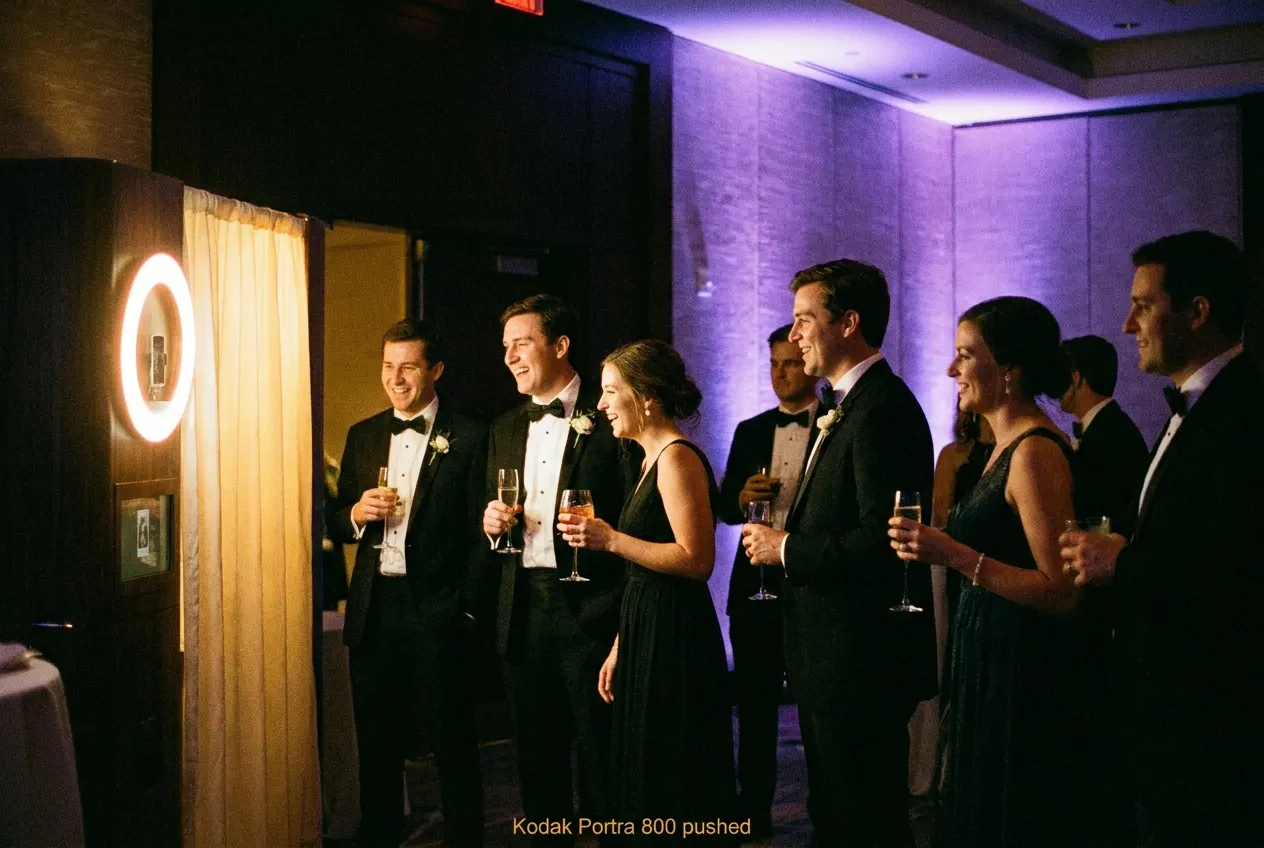
Guests waiting in a warmly lit reception room beside an event photo setup

Both sit in a corner of the reception. Both draw a line of guests in formalwear. From across the room, they can look like the same idea wearing two outfits. They are not the same idea.

A photo booth is a machine with a timer. A portrait station is a photographer with a light kit and a plan for every face that steps in front of it. That one distinction — automated versus directed — is where every other difference in this comparison starts, and it’s usually what couples researching a photo booth alternative for their wedding are trying to name.

This is a feature-by-feature look at what actually separates the two formats: who’s behind the camera, what the light is doing, how the line moves, what guests walk away with, and which one earns its footprint at a Chicagoland wedding, engagement party, or gala. For the full category primer, start with What Is a Portrait Station? The Complete Guide for Weddings.

The Core Difference: Directed vs. Automated

Everything else in this comparison is downstream of one fact: a photo booth has no one directing the shot, and a portrait station always does.

Step into a photo booth and you’re on your own. Pick a prop, find the frame, count down with the flash — the machine decides when the shutter fires. It’s built for speed: get the guest in, get the strip out, keep the line short. Step into a portrait station and a photographer is watching the whole time, adjusting your stance, catching the moment your shoulders drop out of a stiff pose, often shooting two or three frames before landing on the one that works. Nobody presses a button. The guest is photographed, not photographing themselves.

That’s not a quality judgment on the photo booth — it’s a design choice, and it’s why YWNFI still runs a Photo Booth as one of its three core experiences alongside the portrait station and the 360 Video Booth. Some moments call for fast and loose. Others call for a stage, not a curtain.

Feature-by-Feature: What Actually Changes

A portrait station and a photo booth differ across seven categories, from who’s behind the camera to what fits an event’s footprint — the table below lines them up side by side.

FeaturePortrait StationPhoto Booth
Who’s shootingA photographer actively poses and cues each guestNo one — a timer fires the shutter
LightingStudio strobes or continuous lighting, set and meteredAmbient room light or a built-in flash/ring light
PaceSlower — each guest gets direction and a beat to hold stillFast — built for volume and a moving line
Guest experienceStructured, a little formal, closer to a real portrait sittingLoose, playful, prop-driven
OutputStudio-style portrait, composed and consistentSnapshot strip, spontaneous and variable
FootprintBackdrop, light stands, and clearance for the photographer to moveCompact — booth or open-air stand with a printer
Best fitCocktail hour, galas, formalwear crowdsLate reception, casual guest lists, high-volume moments

Who’s Behind the Lens

A portrait station is only as good as the person running it. The photographer reads a stranger in under a minute, puts them at ease, and pulls a real expression out of them before the line gets restless — the same instinct a studio portrait photographer uses, compressed into a cocktail hour.

A photo booth doesn’t need that skill, because no one is performing it. The machine’s consistency is the selling point: the same flash, the same countdown, the same result whether the guest is camera-confident or not. No one to misjudge a pose, and no one to elevate one either.

The Light

This is the part that’s easy to miss on a walkthrough and impossible to miss in the final images.

A portrait station’s light is built, not found — strobes or continuous fixtures positioned and metered for that backdrop, that guest, that outfit, the same principle a studio portrait relies on, staged inside a ballroom or a tent. A photo booth works with whatever light is already in the room, sometimes helped by a built-in flash or ring light. Fine for a fun strip. Not the same tool for a composed portrait.

The Pace

A photo booth line moves in seconds. Step in, pose, flash, done — the entire point is throughput, especially late in a reception when guests want something quick on their way back to the dance floor.

A portrait station moves in a different rhythm: direction, a moment to settle, often a second take. That pace is a feature, not a bug, when the goal is a real portrait — but it means a portrait station generally serves fewer guests per hour than a photo booth in the same window. how to place a portrait station in your wedding-day schedule

The Output

A photo booth produces a strip — a fun, spontaneous document of a moment, often with props and multiple faces crammed into one frame. A portrait station produces something closer to a studio sitting: one clean frame, real light, a guest who looks like themselves at their best rather than mid-laugh with a foam finger. Some couples choose black-and-white for that composed look specifically. how to choose between black-and-white and color for your portrait station

The Footprint and Setup

A photo booth is compact — a booth or an open-air stand, a printer, minimal clearance required. It can slide into a corner without reshaping the room around it.

A portrait station needs more real estate: a backdrop, light stands and modifiers, room for the photographer to move around the guest. Setup typically runs about an hour before shooting begins, with teardown closer to 20–30 minutes — a wider window than a photo booth needs, since there’s more to calibrate before the first guest steps into the light (multiple vendor sites, e.g. Kim Carpenter Portraits).

The Price

Photo booth rentals and portrait station rentals don’t sit at the same price point, mostly because they’re not buying the same labor. Pixel Pro Photo Booths, a Chicago-market vendor, prices a 4-hour portrait-station rental starting at $2,000 plus tax, with about three of those hours as active shooting time (Pixel Pro Photo Booths, retrieved 2026). Lumière Chicago sits at the premium end, publishing a “Portrait Station” package starting at $3,800, with most couples spending $4,800–$6,500 depending on hours and add-ons (Lumière Chicago, retrieved 2026). Standard photo booth rentals, without a directing photographer or studio lighting, typically run below that range.

YWNFI publishes its own numbers in that same market: the portrait station starts from $2,950, and the Photo Booth starts from $1,100. That portrait-station floor sits below Lumière Chicago’s $3,800 base for the same category (Lumière Chicago, retrieved 2026). What moves the total from there is the format booked, hours on site, guest count, and travel — not a hidden fee structure.

For comparison, not substitution: The Knot’s Real Weddings Study puts average wedding photographer cost at roughly $2,000–$3,000 (The Knot) — a useful anchor for where a directed portrait station sits relative to primary wedding photography, even though the two aren’t interchangeable services.

Where a Photo Booth Still Wins

A photo booth wins on speed, volume, and looseness. If the goal is keeping a line short and the mood light late in the night, a photo booth does that job better than a portrait station ever will — that’s what it’s built for. It also asks less of the guest: no posing, no direction, just a prop and a flash.

Where a Portrait Station Wins

A portrait station wins on composed, consistent, studio-quality output — and an experience that reads as part of the event’s design rather than an activity bolted onto it. For a formalwear crowd at cocktail hour, a directed setup matches the room’s energy in a way a countdown timer doesn’t.

Can You Book Both?

Yes — plenty of high-end Chicagoland events book a portrait station and a photo booth for the same night. A portrait station near the entrance or during cocktail hour captures guests at their most composed; a photo booth later in the night catches the crowd once the tempo picks up. They’re not competing for the same job — they’re covering two different moments in the same evening. See the full experiences page lineup for how YWNFI’s three experiences pair together.

Frequently Asked Questions

These are the questions Chicagoland couples and event planners ask most often when comparing a portrait station to a photo booth.

Is a portrait station more expensive than a photo booth?

Generally, yes — a portrait station involves a photographer directing and lighting every shot, which is more labor than an automated booth requires. Chicago-market portrait station pricing runs from roughly $2,000 for a shorter rental to $6,500 or more for a full package (Pixel Pro Photo Booths; Lumière Chicago, retrieved 2026), while standard photo booths without directed shooting or studio lighting typically start lower. YWNFI’s own numbers track that gap directly: the portrait station starts from $2,950 and the Photo Booth starts from $1,100.

Can a portrait station replace a photo booth entirely?

It can, but it doesn’t have to. A portrait station and a photo booth serve different moments — composed and formal versus fast and loose — and many events book both rather than choosing one over the other.

Which one fits a smaller guest list, like an engagement party?

Either works at a smaller scale, but a portrait station tends to fit an engagement party’s more intimate, dressed-up tone especially well, and the resulting images often double as content for save-the-dates or a wedding website.

Does YWNFI offer both a portrait station and a photo booth?

Yes. You Will Never Forget It runs three core experiences — a portrait station, a 360 Video Booth, and a Photo Booth — and many Chicagoland clients book more than one format for the same event, since each covers a different moment in the night.

Does a portrait station need more space at the venue than a photo booth?

Yes. A photo booth is compact — a booth or open-air stand that fits into a corner with minimal clearance. A portrait station needs a backdrop, light stands, and enough open floor for the photographer to move around each guest, plus roughly an hour to set up and 20–30 minutes to tear down (Kim Carpenter Portraits).

The Takeaway

A photo booth and a portrait station aren’t two versions of the same idea — they’re built for different jobs. One moves fast and keeps the mood light. The other slows down, directs the shot, and produces something closer to a studio portrait. Most Chicagoland couples don’t have to choose blind; they can see both formats side by side and book what actually fits their night.

Tell us your date, your venue, and your guest count, and we’ll build a quote around your event specifically. our contact page to start that conversation, or browse pricing page to see how the portrait station, 360 Video Booth, and Photo Booth compare.

You Will Never Forget It — Chicagoland event photography. (224) 434-3461.

Your date only happens once.

We take a limited number of events per weekend so every room gets a full crew. If your date is set, find out now.