Wedding Portrait Station Timeline: Setup, Guest Portraits, and Breakdown
A portrait station timeline should follow the way guests move through your wedding. Start with the venue’s access rules and the reception program, then choose when the station can serve guests without competing with the moments you want everyone to share.
TL;DR
- Confirm venue access and a ready-for-guests time before finalizing the station’s service window.
- Active photography, standby, setup, and teardown are separate parts of the schedule.
- Choose portrait hours around guest availability and the formal program.
- Discuss expected participation and group sizes instead of assuming a fixed guest throughput.
- YWNFI’s Portrait Station starts from $2,950. The final quote depends on format, hours, guest count, and travel. See the current pricing page and request a quote for your event.
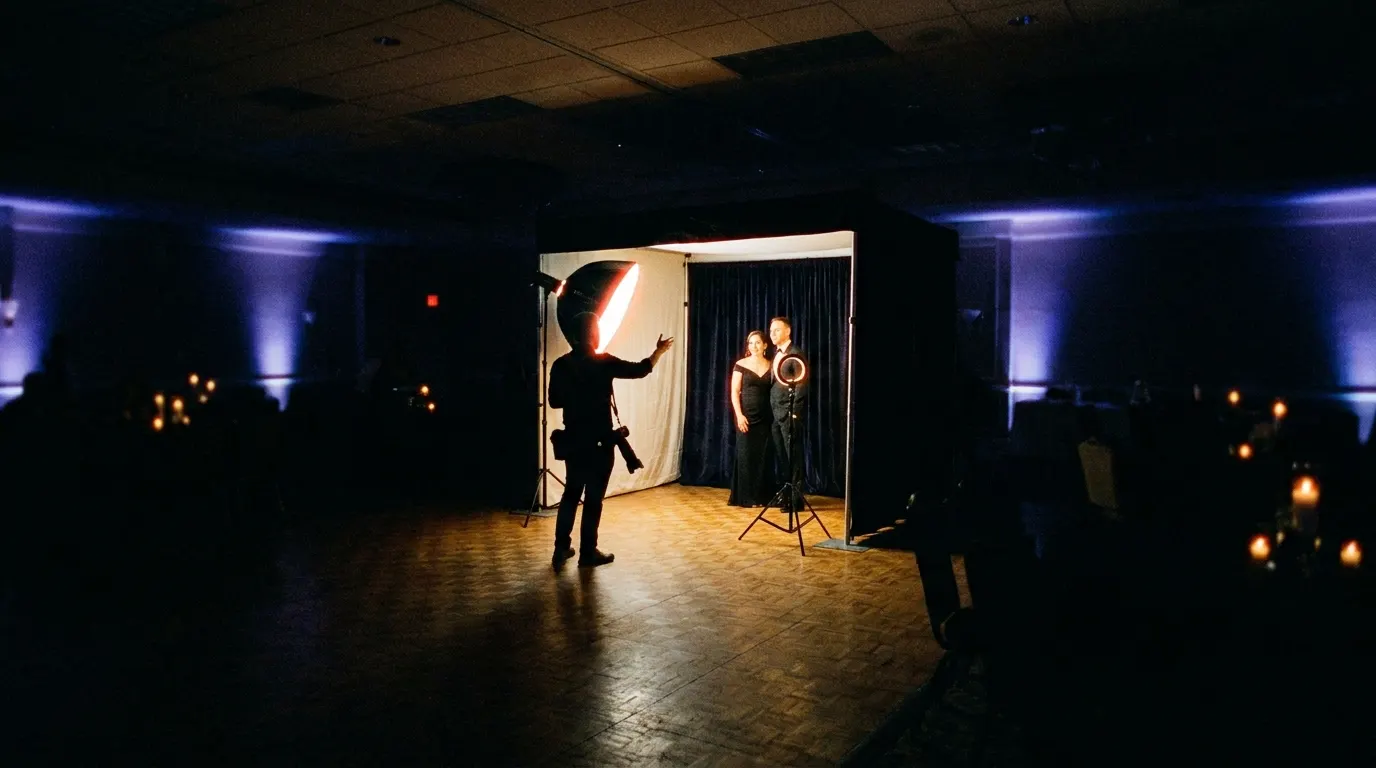
Before Guests Arrive
The crew needs access to bring in the equipment, build the backdrop, position the lights, test the camera and printing, and clear the guest area. Confirm the required window for your venue rather than borrowing another vendor’s timing.
Set a ready-for-guests time. Work backward with the vendor and venue to agree on load-in, elevator or loading access, and setup. If cocktail hour and the reception use different rooms, confirm where the station will operate before the crew arrives.
Opening the Station
Choose a period when guests can stop for a portrait. Arrivals or cocktail hour may work if there is enough time and room. An open reception period may fit better when arrivals are rushed or the ceremony and reception share a space that needs to be reset.
A photographer welcomes each person or group and gives direction. Allow space for guests waiting and for collecting prints without blocking the next sitting. Tell the planner how guests will find the station.
Active Photography and Standby
Active photography means the station is open and making portraits. Standby means an agreed pause, such as during dinner or speeches. Setup and breakdown are separate tasks.
A package that lists standby does not imply that the pause is used to build the set. Write down when portraits begin, when they pause if needed, and when they resume or finish. Clarify how a delayed program affects those times.
Plan Around People, Not Just Hours
Tell the crew whether guests will mostly sit individually, as couples, or in groups. Mention any guests who may leave early and any accessibility requirements that affect the layout.
Do not equate the attendance figure with completed portraits. Participation is optional, and each group takes a different amount of direction. Ask for a workable plan based on your event instead of treating a generic guests-per-hour number as a promise.
Dinner, Speeches, and the Dance Floor
Confirm when the room needs everyone’s attention. A queue should not form across a speaker’s sightline or a catering route. If the station remains open during dancing, make sure guests can reach it without crossing the dance floor or crowded service paths.
Discuss any changes with the operator and planner together. Extending service or moving equipment may need extra time or a revised quote; decide in advance who can approve changes on the night.
Closing and Breakdown
Agree on when the final sitting can begin, how remaining prints will be collected, and when the crew can pack the equipment. The venue should approve a route that avoids interrupting dinner, speeches, or guests leaving.
Gallery delivery is a separate timeline from event-day printing. Refer to the Portrait Station service details and confirm the delivery commitment in your booking.
A Timeline to Complete With Your Planner
| Phase | Decision to record |
|---|---|
| Venue access | When and where the crew can unload |
| Setup | Required access window and ready-for-guests time |
| Active photography | Opening and closing times for guest portraits |
| Standby, if needed | Pauses, restart times, and how delays are handled |
| Final prints | Collection plan before the crew packs away |
| Breakdown | Agreed time, exit route, and venue restrictions |
Bring this plan to your inquiry along with the date and guest count. The cost guide explains how to compare the resulting quotes.
Frequently Asked Questions
How long before guests arrive does the crew need to set up?
Confirm the setup window for your package and venue. Access, loading, equipment, and the room layout affect the plan. Set a ready-for-guests time and have the venue confirm that the crew can enter early enough to meet it.
How many guests can get photographed during a booking?
That depends on active photography hours, group sizes, the style of sitting, and guest participation. Share your guest count and portrait priorities with the vendor for an event-specific plan. A total rental duration alone does not establish guest capacity.
Can a portrait station run alongside other entertainment?
Yes, if the room layout and program support it. Keep its queue clear of the bar, catering routes, and performance areas. Coordinate any pause during speeches or other moments that need the room’s attention.
Does portrait station teardown interrupt the reception?
It can if the access route or timing is poorly planned. Agree on a breakdown window and route with your venue and planner, and avoid packing equipment through the room during the formal program.
What happens if our cocktail hour runs shorter than planned?
Ask whether the agreed service can continue or resume during another reception window. Confirm availability and any extra charges before relying on an extension. Keep setup separate from the guest-facing hours when revising the schedule.
Tell us your date, venue, and guest count to discuss availability and a quote for your event.