Florida field notes / The room plan
Where Should the Portrait Station Go at a Tampa Wedding?
Choose a portrait station location for your Tampa wedding: reception room, adjoining room or cocktail space, with a practical room-planning checklist.
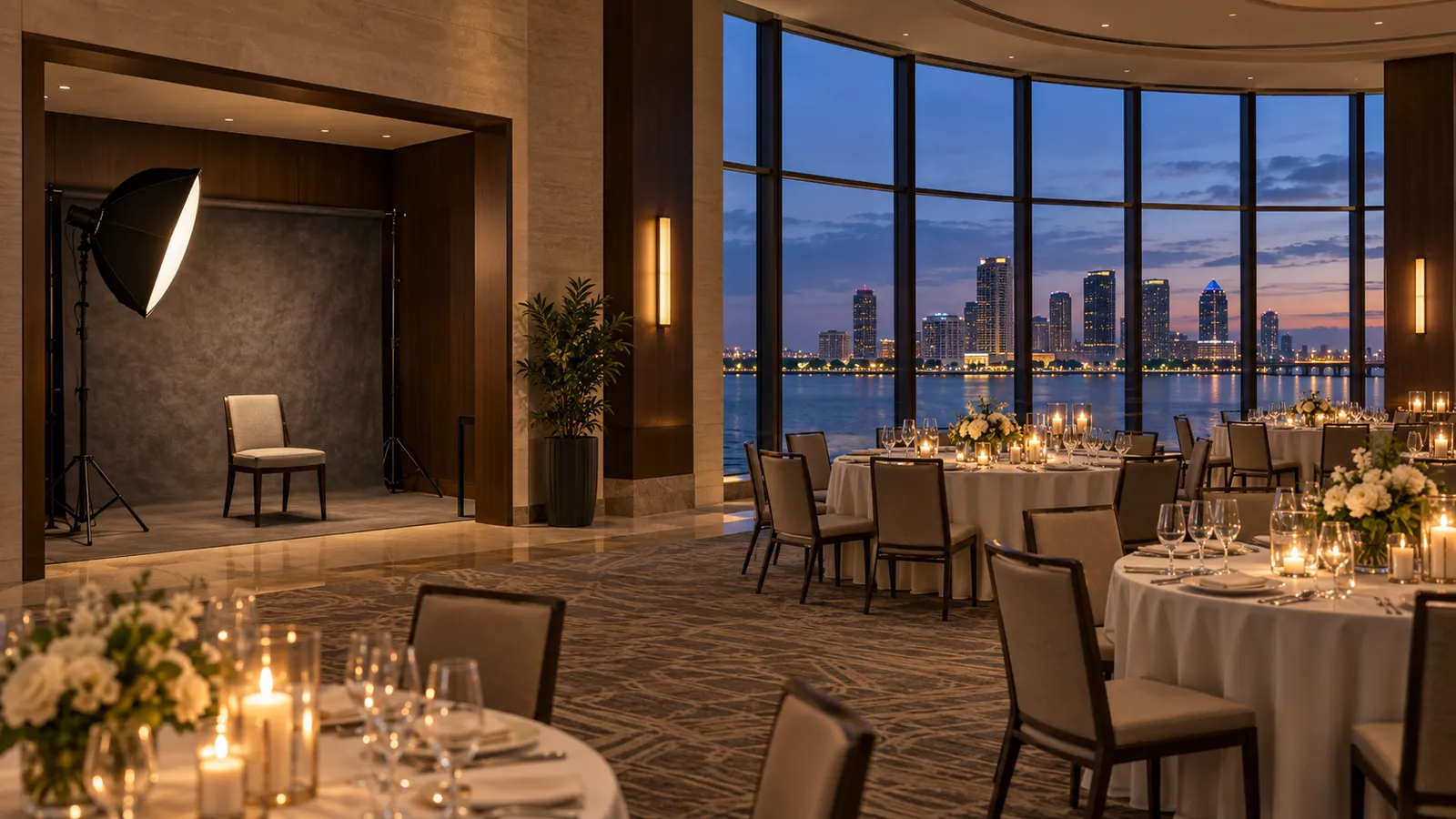
The planning takeaway
- Choose the space guests will actually pass during portrait coverage. A beautiful empty room does not create participation.
- Include the sitting, waiting guests and print collection in the layout, then ask the venue to approve the whole area.
- Confirm a move between cocktail hour and reception before booking; equipment relocation is not an automatic inclusion.
The right portrait-station location is somewhere your guests can notice, reach and return from without losing the evening. Start with the route people will take through your Tampa wedding, then confirm a position with your venue and photographer.
A dramatic corner can look right in a room photograph and still be wrong for portraits. It may become the catering route after dinner, sit behind the band, or belong to a cocktail space guests leave before the station opens. The useful question is not simply whether the equipment fits. It is whether the experience belongs there when guests want to use it.
Trace the evening through the building
Mark where guests arrive, gather for drinks, sit for dinner and dance. Add the portrait station only after that route is clear. If the plan changes between parts of the evening, ask which space remains available for the agreed coverage.
Tampa venues illustrate why the room name matters. Armature Works describes reception venues with adjoining ceremony and outdoor cocktail spaces. Tampa Museum of Art describes a covered terrace and an indoor atrium. A booking at either property could involve different spaces serving different purposes.
Those are venue-published examples, not claims of YWNFI bookings or vendor approval. The event team must confirm the actual room and permitted setup for your celebration.
At the edge of the reception
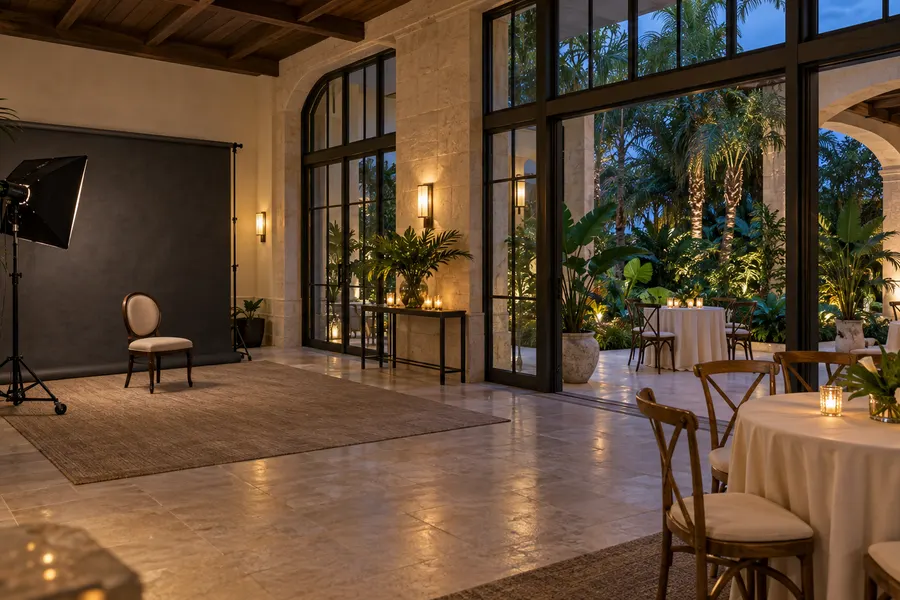
A position within the main room keeps portraits connected to the party. Guests can see what is happening and decide to join when conversation or dancing gives them a natural pause.
Look beyond the backdrop. Include the photographer’s working area, people waiting, guests collecting prints and a clear route back to their tables. Ask how DJ lighting, a nearby speaker or a service door may affect the proposed location. The photographer and venue should review those conditions together.
Avoid using an apparently empty doorway as overflow. The space around the experience needs to function throughout the event, including when dinner service begins.
In an adjoining room
A nearby room can give the sitting a calmer atmosphere. Its weakness is visibility: if guests have no reason to enter, the station can feel detached from the celebration.
Walk the route from the reception as a guest. Can you see the entrance? Is the room clearly part of your event? Will people pass it again after dinner? A planner’s announcement or clear invitation may help, but it cannot fix a location that is inconvenient to reach.
Confirm that the room remains available for the full portrait window. A space used for the ceremony may have a reset or another scheduled purpose.
In the cocktail space
Cocktail hour can be a natural introduction to guest portraits, provided the station is ready and people have time to participate. The question is what happens when everyone moves to dinner.
Decide whether portraits finish there, continue in that space, or move under a separately agreed plan. Do not assume that a photographer, backdrop, lighting and printer can follow guests through the doors without interrupting service. The portrait-station timeline guide explains how to separate setup, active photography and planned pauses.
Compare the options on your floor plan
| Candidate space | What makes it promising | What to confirm |
|---|---|---|
| Reception-room edge | Guests remain close to the celebration | Service routes, entertainment and full operating area |
| Adjoining room | A more contained sitting environment | Visibility, access and continued room availability |
| Cocktail area | Guests gather there early in the evening | Coverage after dinner begins and any relocation |
Take the preferred option to your venue with the date, schedule and guest count. Ask for the complete setup approval, not just permission to put a backdrop in a corner. The vendor checklist can help keep the agreed details together.
For our Tampa Bay Portrait Station, we start with the event you are actually planning. Send the venue and room you have in mind, and we can discuss placement alongside availability and coverage.
Common questions
Can the Portrait Station move from cocktail hour to the reception?
A move needs to be planned and quoted. Share the rooms, access route and schedule before booking so equipment relocation and any pause in guest photography can be reviewed with the venue.
Does the station need a separate room?
Not necessarily. A reception-room position may work if the complete operating area fits and the venue approves it. A separate room should be easy for guests to find and reach.
What should I send to discuss a Tampa venue?
Send the date, venue, exact event room and approximate guest count. A floor plan showing dining, entertainment, entrances and service routes helps us discuss portrait placement.
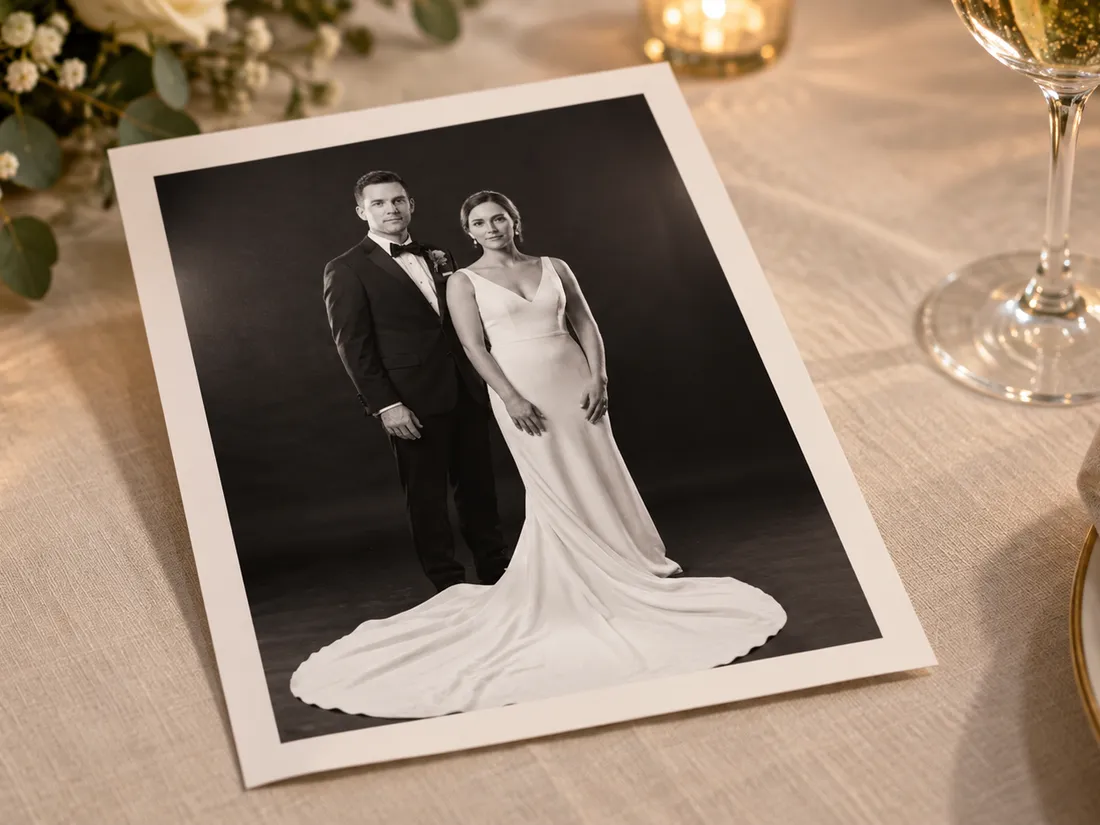
Bring the idea
into your evening.
Send your date and venue. We will discuss a Portrait Station plan for your event.
Check your datePortrait Station in Tampa BayKeep planning.
All Florida field notes
The beach ceremony is only part of the plan.
Illustrative concept
A portrait set in a room full of art.
Illustrative concept
Plan beyond the garden ceremony.
Illustrative concept